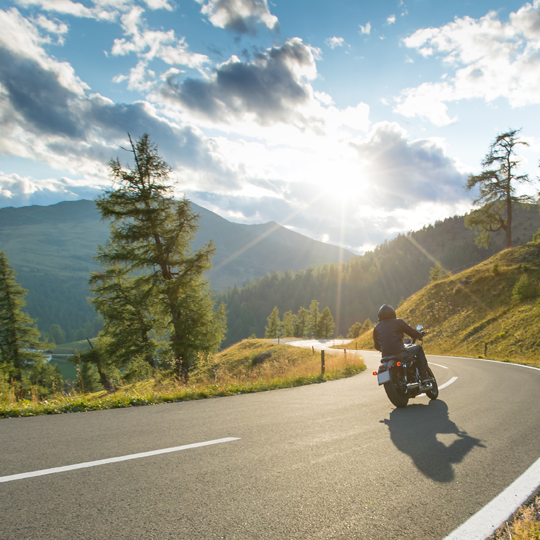
It's 85 degrees when you roll out of the driveway. Perfect riding weather. Then you climb toward the pass, the road keeps going up, and by the time you crest the summit it's 50 and your hands have stopped doing what you tell them.
That's not a winter story. That's a July afternoon in the mountains, and it catches riders off guard every single year.
Summer cold is real, and it shows up in the moments where being cold is most dangerous: high passes, early starts, and the ride home after dark. Heated gear isn't just for the off-season. The smart riders keep it packed all year.
Where Summer Turns Cold
Four situations bite riders even in the hottest months:
Altitude. Air cools roughly 3 to 5 degrees for every thousand feet you climb. A mountain pass can sit 30 degrees colder than the valley you left an hour ago. The view is the reason you rode up there. The cold is the part nobody warns you about.
Dawn departures. The best summer rides start before sunrise to beat traffic and heat. Those first two hours, before the sun does its work, can be 40 degrees and damp.
Night rides. Desert and high-country temperatures fall off a cliff after sundown. A 95-degree afternoon becomes a 50-degree night, and you've still got two hours of highway to go.
The ride that runs long. Weather turns, a stop runs late, and suddenly you're riding home in conditions you didn't dress for.
Wind Chill Does the Real Damage
Here's what makes it worse on a bike than on foot: speed. At highway pace, moving air strips heat off your body fast. Fifty degrees standing still is mild. Fifty degrees at 65 miles per hour feels like the 30s, and it pulls warmth out of your hands and core the entire ride.
This isn't only a comfort problem. Cold hands lose dexterity and grip strength, and slow reaction time. On a motorcycle, hands that won't respond are a safety issue, not an inconvenience. Staying warm keeps you in control.
Start With the Hands
Hands take the worst of it because they're out front in the wind with little insulation. A few ways to fix that:
Heated glove liners slip inside the gloves you already ride in and add warmth without bulk, so you keep your feel for the controls.
12v heated gloves wire straight into the bike for unlimited runtime on long days, no batteries to watch.
Bar mitts mount to the handlebars and block the wind entirely, a simple add-on that makes a real difference on cold descents.
Core Warmth Without the Bulk
Warm your torso and the rest of you follows, because your body keeps sending blood to your hands and feet when your core is comfortable. A heated vest layers under your riding jacket and runs off a battery or wires into the bike, adding heat exactly where it does the most good without turning you into a marshmallow that can't move. It packs down small enough to stash in a saddlebag for the descent or the night leg, then comes off when the valley warms back up.
A temperature controller lets you dial heat up on the pass and down in the warm stretches without pulling over, which is exactly what you want on a ride that swings 40 degrees in an afternoon.
Don't Forget the Feet
Feet are the other casualty on a cold ride, stuck low in the wind stream and packed into boots that don't move much air. Cold toes start as an annoyance and become a real distraction over a few hours. A pair of heated socks runs off a small battery at the cuff and keeps your feet working through a chilly dawn or a long descent. They tuck into riding boots without changing your fit, and like the vest, they come off the second the day warms up.
The Long-Haul Upgrade
Tourers and anyone logging serious miles should look at a heated motorcycle seat. It wires into the bike and warms you from the one place you're always in contact with the machine. On a cold dawn highway slog, it takes the edge off in a way no jacket reaches.
Battery or Wired?
Riders have a choice most other heated-gear users don't: power off a portable battery, or wire into the motorcycle's electrical system. Battery gear is flexible and works off the bike. Wired gear never runs out on a long day but ties you to the machine. Our guide to battery versus plug-in heated gear walks through the tradeoffs so you pick the right setup for how you ride.
Best For / Skip It
Best for: Riders who tackle mountain passes, leave before dawn, ride after dark, or take long trips where weather and altitude change under them.
Skip it if: You only ride short afternoon loops at low elevation in steady summer heat.
A Word on Packing Your Gear
The mistake isn't owning heated gear. It's leaving it home in July because it's hot in the driveway. Throw the vest and glove liners in the bag on any ride that climbs, starts early, or might run into the night. They take up almost no room, and the one time you need them, you'll be glad they're there instead of white-knuckling a cold descent. If you want ideas for where to point the bike, our roundup of great American motorcycle rides has a few worth the trip, several of them right through the high country where this gear earns its place.
Next Steps
Summer riding is some of the best riding there is, right up until the temperature drops out from under you. A little heated gear in the saddlebag keeps the good rides good.
See the full picture in our heated motorcycle clothing buying guide, then browse heated gear to build your kit. Questions about wiring, sizing, or what fits your bike? Contact us and we'll help you dial it in.
Disclaimer: Heating performance and battery life vary by model, temperature, and speed. Wire-in installations should follow the product and motorcycle manufacturer instructions, or be done by a qualified shop. Ride within your limits and dress for the coldest conditions you might meet.