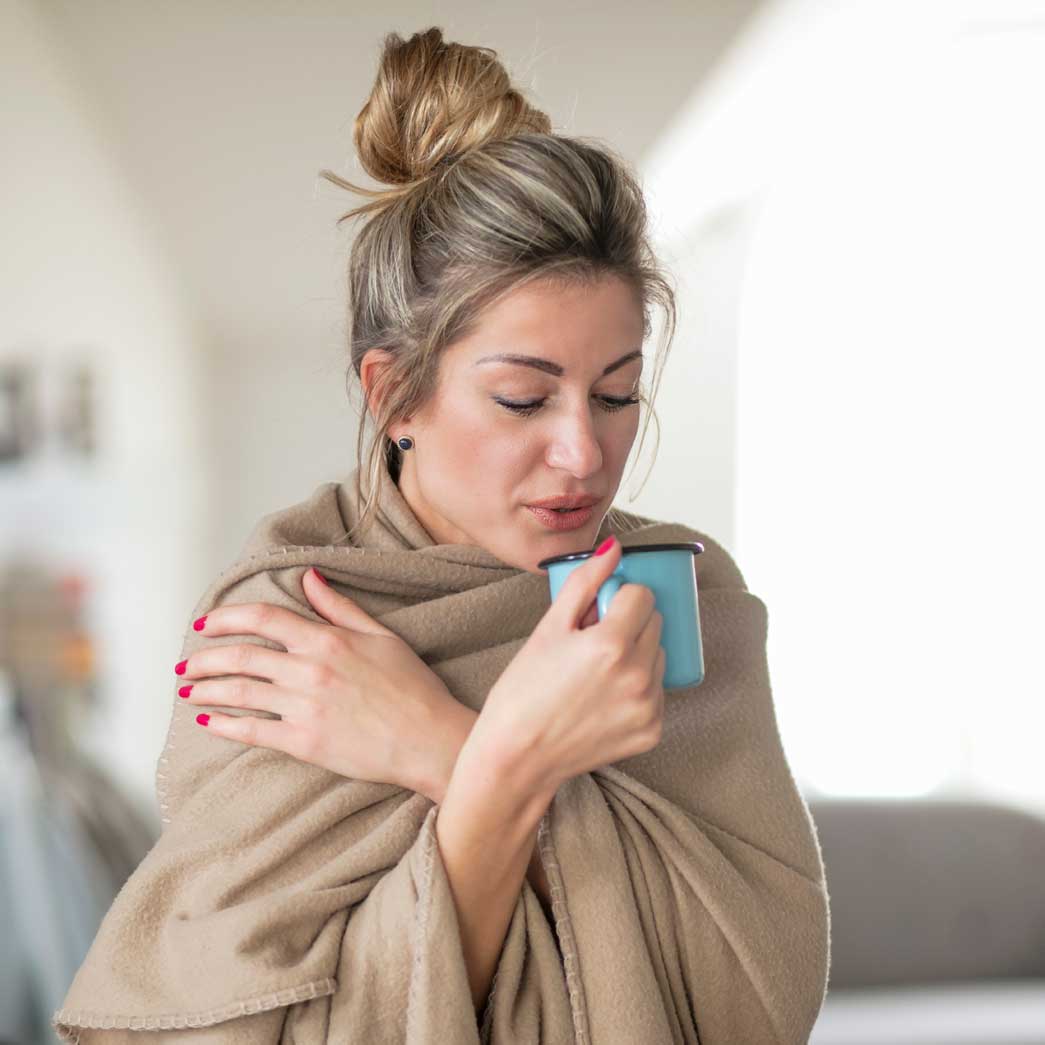
It's the middle of July. Outside it's pushing 90°F. Inside your office, restaurant, movie theater, or shopping mall, you're cold. Not slightly chilly — actually cold. Rubbing your arms, wishing you'd brought a layer, wondering how a building full of people can feel like a walk-in refrigerator in the middle of summer. If this sounds familiar, you're not alone — and you're not imagining it.
Over-air-conditioned commercial spaces are one of the most common temperature comfort complaints in the United States, and they disproportionately affect certain people: women, who on average have a lower metabolic rate and prefer ambient temperatures roughly 5°F warmer than men; people with circulation issues; older adults whose thermoregulation becomes less efficient with age; and anyone who sits still for long periods in a direct blast of cold air. The good news is that personal warming solutions have come a long way, and you don't need anyone to adjust the thermostat to be comfortable.
Why Commercial Spaces Run So Cold in Summer
Commercial HVAC systems are typically calibrated for a "standard occupant" — a concept from 1960s-era building standards based on the metabolic rate of a 40-year-old, 155-pound man in a suit. That standard has never been updated to reflect the actual diversity of the people working, dining, and shopping in those buildings. The result is thermostats set to temperatures that work for some occupants and leave others genuinely uncomfortable.
Add to that the fact that commercial cooling systems are designed to handle peak occupancy — a full restaurant at lunch, a packed open-plan office — and they're frequently overcooling during off-peak periods. Many commercial buildings also run their HVAC at full capacity regardless of actual indoor occupancy because modulating the system precisely is more complex than simply running it cold and letting people layer up. The thermostat on the wall often isn't connected to the zone you're sitting in, and building managers are rarely available to adjust it in real time.
The practical result is that millions of people spend their summers cold in indoor spaces while it's hot outside — which is both uncomfortable and an enormous waste of energy.
Personal Warming Solutions That Actually Work in Summer
The most effective approach to over-air-conditioned spaces isn't a bulkier sweater — it's targeted personal heating that warms the specific parts of your body that get cold first without making you uncomfortable in transition between indoors and outdoors. Here's what works best by situation:
- Desk and office work. The combination of sitting still for hours in cold air, often in direct line of an AC vent, makes the office one of the hardest environments to stay comfortable in. A desk foot warmer or heated foot pad under your desk addresses the most common cold spot — feet and legs — without affecting anyone around you. A lap throw or small heated blanket draped over your legs handles the same problem for people who prefer fabric over a hard surface. Both run on standard outlets and consume minimal electricity.
- Restaurants and dining. You can't bring a heated product to a restaurant, but you can wear one. A thin heated base layer or a lightweight heated vest worn under regular clothes gives you a discreet warmth layer for dining situations where you know the AC is going to be aggressive. This is particularly useful for people who routinely go straight from an outdoor summer activity to a cold restaurant without time to change.
- Movie theaters and entertainment venues. Battery-powered heated products — particularly compact heated blankets and battery-powered seat cushions — are well suited for these environments. They don't require an outlet, they're quiet, and they provide immediate warmth for a two-hour movie in a theater that runs cold enough to be genuinely unpleasant.
- Long car trips in summer. Counterintuitive as it sounds, car AC creates the same problem for passengers who have no control over the temperature. Heated seat covers that plug into the car's power outlet give passengers control over their own seat temperature regardless of what the driver has set for the cabin.
The Best Products for Staying Warm in Cold Summer Spaces
At CozyWinters, we carry products specifically suited to this exact problem — targeted, personal, and designed to integrate cleanly into everyday environments. A few that consistently get high marks from customers dealing with over-air-conditioned spaces:
- Heated foot warmers and desk heating pads. RugBuddy and similar under-desk heating pads provide steady, gentle floor warmth for office workers. They're thin enough to fit under a standard desk, run on a standard outlet, and make a consistent difference for people whose feet and legs get cold within the first hour of sitting at a desk in a cold office.
- Lap throws and electric throws. A lightweight electric throw over your legs at your desk or at a workstation gives you adjustable warmth without the bulk of a full blanket. Models with auto-shutoff are safe for all-day use and don't require constant adjustment.
- Battery-powered heated blankets. For environments without outlets — theaters, stadiums, outdoor venues with AC misters — a battery-powered heated blanket provides portable warmth for several hours on a single charge. The Cozee battery heated blanket is one of our top performers for exactly this use case.
- Lightweight heated vests. A thin, battery-powered heated vest worn under a regular shirt is one of the most versatile solutions for people who move between cold indoor spaces and hot outdoor conditions throughout the day. You can dial the heat down or off when you step outside and back up when you return indoors, without removing a layer.
Browse our full selection of heated clothing to find wearable warmth options that work in summer office and dining environments without looking like you're dressed for January.
Who Benefits Most From Personal Warming in Summer
If you've wondered why you're always cold in spaces where others seem comfortable, there are real physiological reasons — and they're worth understanding.
- Women generally have a lower resting metabolic rate than men and generate less internal body heat. Research consistently shows that women prefer ambient temperatures approximately 3–5°F warmer than men in the same environment. The legacy commercial building standards that set most office temperatures were calibrated for male metabolic rates — which is why the "office is too cold" complaint skews significantly toward women.
- People with Raynaud's disease or poor circulation experience exaggerated cold responses in the extremities — particularly hands and feet. Cold air conditioning that would be merely uncomfortable for someone with normal circulation can cause genuine discomfort and prolonged recovery time for people with these conditions.
- Older adults experience a gradual reduction in thermoregulatory efficiency, which means their bodies are slower to generate and retain heat in response to cold environments. What a 30-year-old finds mildly chilly can be genuinely cold for someone in their 60s or 70s in the same space.
- People with thyroid conditions — particularly hypothyroidism — often experience chronic cold sensitivity. Summer AC environments amplify this significantly.
For all of these groups, personal warming products aren't a comfort luxury. They're a practical, low-cost solution to a real daily problem that no thermostat negotiation is going to fully resolve.
The Energy Angle: Personal Heating vs. Raising the Thermostat
Running a desk foot warmer or heated lap throw costs a fraction of what it costs to heat an entire office or room. A personal heating product drawing 50 to 150 watts to warm one person uses significantly less energy than raising the thermostat for an entire floor. In a home office context, this math is especially compelling — warming the person at the desk rather than heating a room you're otherwise not using is both more effective and more economical.
For home offices specifically, our portable heating and personal warming collection covers every configuration from under-desk foot warmers to full heated desk pads and compact space heaters sized for a single room — all options that let you control your own comfort without running whole-house heating on a summer day.
Frequently Asked Questions: Staying Warm in Over-Air-Conditioned Summer Spaces
Why are offices and restaurants so cold in summer?
Commercial HVAC systems are typically calibrated for peak occupancy using outdated building standards based on a 1960s model of a 155-pound man in a business suit. These systems frequently overcool during off-peak times and run independently of actual occupant comfort. The result is that many commercial spaces are consistently colder than most occupants prefer, particularly in summer when outdoor heat pushes systems to run at full capacity.
What is the best product for staying warm in a cold office?
An under-desk foot warmer or heated floor pad is the most effective and unobtrusive solution for office cold. It targets the feet and legs — the areas most commonly cold in a seated office environment — without affecting anyone nearby. A heated lap throw is a close second for people who prefer fabric warmth over a floor pad.
Are heated products safe to use in an office?
Yes. Heated office products like desk foot warmers, electric lap throws, and heated seat cushions are designed for all-day use and include safety features like auto-shutoff timers. They plug into standard outlets and draw minimal power — typically between 50 and 150 watts — which is less than most desk lamps.
Can you wear a heated vest under regular clothes?
Yes. Modern battery-powered heated vests are thin enough to wear under a regular shirt or light sweater without being visible or adding significant bulk. They're one of the best solutions for people who move frequently between cold indoor spaces and hot outdoor environments in summer, since the heat can be adjusted or turned off instantly.
Why do women get colder in offices than men?
Women generally have a lower resting metabolic rate than men, which means they generate less internal body heat. Research has shown that women prefer ambient temperatures roughly 3–5°F warmer than men on average. Commercial building thermostat standards were originally calibrated based on male metabolic rates — which is why women disproportionately report being cold in office environments.
What is the best portable heated blanket for cold theaters or restaurants?
Battery-powered heated blankets are the right solution for environments without outlets. The Cozee battery-operated heated blanket is one of our top-rated options for this use case — it provides several hours of warmth on a single charge, folds compactly, and works anywhere from a movie theater to an outdoor venue.
Is it expensive to run a personal heated product all day at a desk?
No. A desk foot warmer or electric lap throw running at 100 watts for 8 hours costs approximately 10 to 15 cents in electricity at average U.S. rates — significantly less than the cost of raising a room or office thermostat. Personal heating products are one of the most energy-efficient ways to stay comfortable in a cold space.