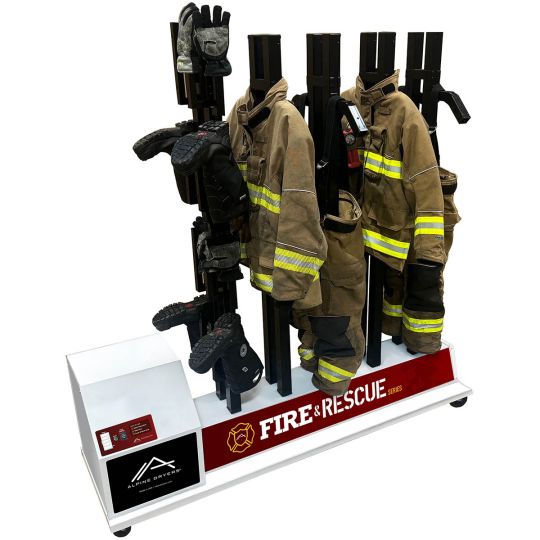
The gear comes back from a call soaked, from sweat, from the hose line, from the weather. It gets hung on a hook in the bay. Twelve hours later, the next shift pulls on boots that are still damp inside and a coat that's clammy against the liner.
That's the daily reality in a lot of stations, and it's a bigger problem than it looks.
Wet protective gear isn't just unpleasant. It wears out faster, it harbors the things you don't want against a firefighter's skin, and it leaves a crew suiting up in damp gear right before they need it most. Drying gear properly and quickly is part of keeping both the people and the equipment in service.
Why Wet Gear Is a Real Problem
A few things go wrong when turnout gear, boots, and helmets stay wet:
Bacteria and odor. Warm, damp gear is an ideal home for bacteria and fungus. That's the source of the smell that takes over a gear room, and it's a hygiene concern for anyone pulling that equipment back on.
Equipment breakdown. Turnout gear, boots, and helmets are expensive, and moisture sitting in the materials breaks them down faster, shortening the service life of gear that costs a department real money to replace.
Readiness and comfort. Damp gear is heavier, colder, and more uncomfortable to work in, and nobody wants to start a call already wet. Gear that's dry and ready is gear a crew can count on.
Mildew and the gear room. Wet equipment crowded into one space turns the whole room humid and musty, which spreads the moisture problem from one set of gear to all of it.
Air Drying Isn't Enough
Hanging gear on a hook seems like drying, but it isn't, not on the timeline a station needs. Turnout gear is thick, multi-layered, and built to keep moisture out, which also means it's slow to give moisture up. Left to air dry, the outer shell may feel dry while the liner and the inside of the boots stay damp for a day or more. Boots and gloves are the worst case, since air never reaches the inside where the sweat actually pools. When the next call can come at any hour, "it'll dry eventually" isn't a plan.
The Equipment That Does the Job
Purpose-built gear dryers move air, and sometimes gentle warmth, through and around equipment to dry it fully and fast. The right tool depends on what you're drying and how much:
Turnout gear dryers. A turnout gear dryer is built to dry full coats and pants, inside and out, by circulating air through the layers, so the whole ensemble is ready well before air drying would get there.
Helmet dryers. A helmet dryer handles the suspension and padding inside a helmet, where sweat collects and odor builds, a spot that almost never dries on its own.
Locker boot dryers. A locker boot dryer installs right into gear lockers so boots dry where they're stored between shifts, no separate step and no wet boots waiting on the next crew.
Glove dryers. A glove dryer reaches inside structural and work gloves, which otherwise stay damp and stiff and hold odor.
Drying cabinets. A drying cabinet is the all-in-one option, an enclosed unit that dries full sets of gear, boots, gloves, and helmets together in controlled airflow, ideal for a station that needs to turn a lot of equipment around at once.
Matching Capacity to Your Crew
The right setup scales to the operation. A small department or a single apparatus may do fine with a turnout gear dryer plus locker boot dryers built into the existing lockers. A busy station turning over multiple crews needs higher capacity, often a drying cabinet or a multi-position system, so a full shift's gear dries between calls rather than backing up. The questions to answer first: how many sets of gear, how fast you need them back in service, and whether you're drying in a dedicated room or working gear drying into existing locker space.
Protecting the Investment
It's worth saying plainly: protective equipment is one of the larger ongoing costs a department carries, and moisture is one of the quiet ways that gear's life gets cut short. Drying equipment after use, fully and on a schedule, protects that investment and keeps gear performing the way it's supposed to. Manufacturers and standards bodies have specific care and cleaning guidance for protective gear, and proper drying is part of following it, so check your equipment's care requirements and your department's procedures alongside any drying setup.
We covered the related side of this for facilities outside the fire service in our look at commercial boot and gear dryers for facilities managers, which is worth a read if you're equipping a larger building or crew.
Where It Goes and How It Runs
Plan the space before you buy. Turnout gear dryers and cabinets need a footprint and clearance for airflow, and they run best in a ventilated room rather than a cramped closet. Locker boot dryers tuck into the gear lockers you already have, so they take no extra floor space. Most units are built to run unattended overnight, which fits the way stations operate, gear goes on after a call and is dry by the next shift. Look for sturdy commercial-grade construction, since this equipment runs constantly in a demanding environment, and confirm the power requirements match what your bay or gear room can supply.
Best For / Skip It
Best for: Fire departments, EMS, search and rescue, and any crew whose protective gear gets wet and has to be ready for the next call fast.
Skip it if: Your gear rarely gets wet and you have plenty of time and space to air dry between uses, which is rarely the case in active service.
Next Steps
Wet gear is slower, smellier, shorter-lived, and harder on the crew. Drying it properly is a small piece of equipment that protects a big investment and keeps your people ready.
Browse our turnout gear dryers, drying cabinets, and the helmet dryer buying guide to find the right capacity for your station. Equipping a department and want help sizing it? Contact us and we'll work through it with you.
Disclaimer: Always follow your protective equipment manufacturer's care instructions and your department's standard operating procedures. Drying equipment supports proper gear care but does not replace required cleaning, inspection, and maintenance.