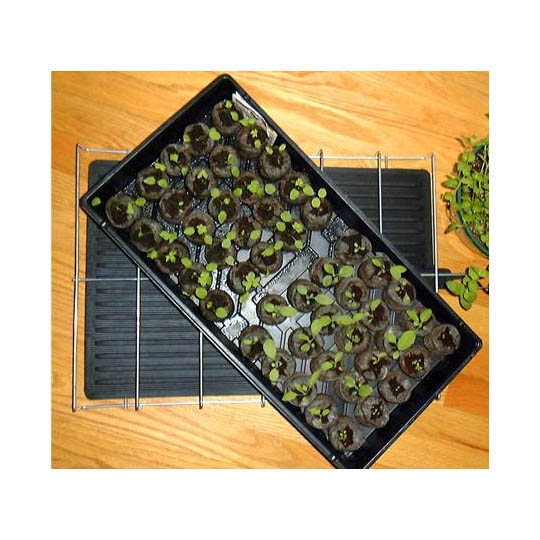
Your seedlings took three weeks to sprout this spring, and half of them never showed at all. You blamed the seeds. You blamed yourself.
The seeds were probably fine. The soil was just too cold.
Seed starting lives and dies on soil temperature, and most home setups, a basement bench, a garage shelf, a spare-room table, sit a good 10 to 15 degrees colder than seeds want. A heated germination mat fixes that, and it's just as useful in July as it is in March.
Why Soil Temperature Decides Everything
Seeds don't read the calendar. They read the dirt. Each type has a temperature range where it germinates well, and most warm-season vegetables, peppers, tomatoes, eggplant, basil, want soil in the 70s to sprout quickly and evenly. Drop into the low 60s and germination slows to a crawl. Drop further and seeds just sit there, soaking up moisture without sprouting, which is exactly when they rot.
That's the part people miss. Cold, wet soil doesn't just delay seeds, it kills them. The seed absorbs water, can't get the warmth signal to germinate, and fungus moves in. You get patchy trays and weak, leggy survivors, then you start over and lose two weeks you can't get back.
Air temperature isn't the answer either. A room can feel comfortable while the soil in a tray sitting on a cool surface stays cold to the touch. Roots care about the soil, not the thermostat on the wall.
It's a Summer Tool, Not Just a Spring One
Here's why June is the right time to think about this. The fall garden gets started in the heat of summer. Brassicas, fall lettuce, and other cool-season crops need to be seeded in mid to late summer so they mature before frost. Start them in trays on a shaded bench and you're back to the same cold-soil problem, even in July.
A germination mat also turns summer into propagation season. Taking cuttings from herbs, perennials, and houseplants works far better with gentle bottom heat, which pushes roots faster and gives you stronger young plants. Gardeners who run a mat year-round get more out of every seed packet and every cutting, in every season.
What a Heated Germination Mat Actually Does
A heated germination mat is a low-watt warming pad that sits under your seed trays and raises the root-zone temperature a steady amount above the surrounding air, usually enough to bring a cool basement into that ideal sprouting range. It warms from the bottom, which is exactly where germinating seeds and rooting cuttings want it.
The payoff is faster, more even germination, higher sprout rates, and fewer losses to rot. Seeds that crept along for weeks come up in days. For a bigger setup or a propagation station running several trays at once, a larger germination mat covers more ground without crowding everything onto one small pad.
Add a Thermostat for Real Control
A mat alone holds a fixed offset above room temperature, which is fine for most seeds. But if you're serious, or starting several types with different needs, pair it with a heat mat temperature controller. You set the target soil temperature, the controller cycles the mat to hold it, and you stop guessing.
This matters because the perfect temperature isn't the same for everything. Peppers want it hot. Lettuce sprouts fine cooler and can actually struggle if you cook it. A controller lets you dial in the number for what's in the tray instead of running one setting for everything.
Who It's For
Anyone starting plants from seed indoors, especially in a cool basement, garage, or unheated room where trays sit on a cold surface.
Fall-garden growers seeding cool-season crops in trays during the heat of summer.
Propagators rooting cuttings from herbs, perennials, and houseplants.
Impatient gardeners who are tired of patchy trays and the two-week reseed.
Best for: Seed starters and propagators who want faster, more reliable germination, in any season.
Skip it if: You only ever direct-sow outdoors in warm soil and never start anything in trays.
How to Use It Right
A few habits keep your seedlings happy:
Put the mat under the tray, not in direct contact with soil or water. Most mats are water-resistant, but a tray or humidity dome between the mat and the wet soil is the safe setup.
Use it to germinate, then ease off. Bottom heat is for sprouting. Once most of a tray is up and growing true leaves, most seedlings do better moved off the constant heat so the roots don't dry out or get pushed too hard.
Keep an eye on moisture. Warm soil dries faster, so check trays more often and water from the bottom when you can.
Pair it with light. Heat gets seeds up. Good light keeps them from stretching into thin, weak stems. The mat is one piece, not the whole system.
Don't crank it under heat-sensitive seeds. Hotter is not always better. Match the warmth to the crop, which is exactly what the controller is for.
What It Costs to Run
People assume any heating device runs up the power bill. A seedling mat doesn't. These pads draw very little wattage, comparable to a couple of light bulbs, and they only run while you're starting seeds or rooting cuttings for a few weeks at a stretch. The cost over a season is small, and it's tiny next to the price of replacing a tray of seeds and losing two weeks of growing time to a cold-soil failure.
Reliability matters more than raw heat. Look for a mat with even warmth across the whole surface so one corner of the tray isn't sprinting while the other sits cold, and keep the cord and connections clear of where you water. Treat it like any other electric device around moisture and it will run trouble-free for years.
Next Steps
Cold soil is the silent reason so many trays underperform. A little gentle warmth from underneath turns slow, patchy germination into fast, even sprouting, and it earns its keep spring, summer, and fall.
Browse our heated germination mats and the rest of the household heating lineup to find the right size for your setup. Not sure what fits your bench or your crop list? Contact us and we'll help you sort it out.
Disclaimer: Ideal germination temperatures vary by plant. Follow your seed packet recommendations and the product instructions, and keep electric warming devices away from standing water.