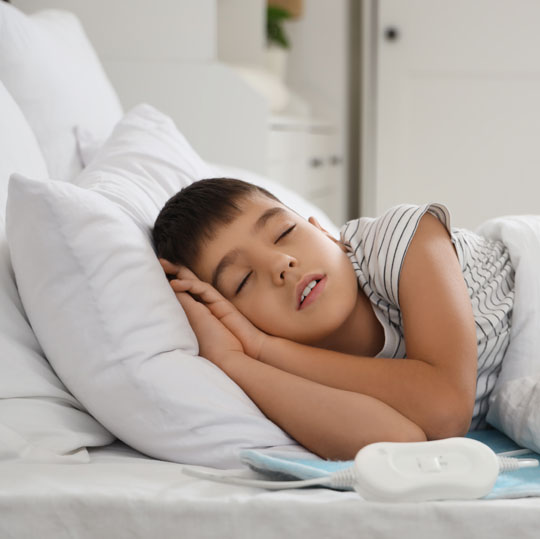
You crawl into a cold bed, flip the controller to high, and drift off warm. Then the question hits at 2 a.m.: is it actually safe to leave this thing on until morning?
The answer depends far more on your blanket than on the habit.
A modern electric blanket with auto shutoff is designed for bedtime use, but the safest way to sleep with one is to preheat the bed and then turn it down low or let a timer shut it off. The risk sits almost entirely with old, damaged, or folded blankets — not with a newer blanket used flat and on a timer.
What Makes Older Electric Blankets Risky
According to the Electrical Safety Foundation International, almost all electric blanket fires involve blankets more than ten years old. Older designs ran higher voltage through heavier wires, and years of folding, washing, and storage can crack insulation or kink the heating wire.
Folding and bunching create hot spots. When the blanket doubles over on itself, heat from two layers of wire builds up in one spot with nowhere to go. That's why you should never fold, tuck in, or bunch an electric blanket while it's on.
Visible wear is a stop sign. Dark, charred, or frayed spots and cracked cords mean the blanket should be replaced, not repaired.
What Modern Blankets Do Differently
Low-voltage, thin-wire construction runs cooler and spreads heat more evenly than older blankets. The Beautyrest blankets we carry are built with very low EMF output, and modern wiring is thin enough that you barely notice it through the fabric.
Auto shutoff caps run time. Most quality blankets and mattress pads turn themselves off after about 10 hours. Some let you set a shorter timer — Serta's heated mattress pads offer a 1–12 hour auto shutoff, so you can match it to how long it takes you to fall asleep.
More heat settings mean lower overnight heat. With 10 to 20 heat settings on Serta and Beautyrest models, you can preheat on high and then drop to a setting barely above body temperature for sleeping instead of choosing between "hot" and "off."
Dual controls solve the two-sleeper problem. Queen and king sizes have a separate controller for each side, so one person can sleep warm while the other turns their side off.
The Safest Way to Sleep Warm
- Preheat on high for 20–30 minutes before bed.
- Turn it down to low or off when you get in, or set the timer for 1–2 hours.
- Keep it flat on the bed — never folded, tucked in, or bunched under you.
- Plug it straight into the wall, not into an extension cord or power strip, and don't run the cord under the mattress.
- Replace any blanket more than 10 years old or showing wear.
If you mostly want warm sheets rather than warm covers, a heated mattress pad heats from below, where heat naturally rises into the bed. We compared the two head to head in our post on heated mattress pads vs. electric blankets.
Best for: Cold sleepers, couples who disagree on bedroom temperature, and anyone trying to lower the thermostat at night without sleeping cold.
Skip it if: The bed is for an infant, toddler, or anyone who can't feel heat or easily turn the blanket off. Never use an electric blanket for them — choose extra non-heated layers instead.
Who Should Never Use an Electric Blanket Overnight
Electric blankets aren't safe for infants, young children, or anyone who can't sense heat or remove the blanket on their own. They also shouldn't be used on waterbeds or alongside a heating pad. Our original electric blanket safety tips cover the full list.
Next Steps
If your blanket is newer, has auto shutoff, and lies flat, preheating and sleeping on a low setting is a sensible way to stay warm. If it's more than a decade old, it's time to replace it. Browse our full selection of electric blankets with auto shutoff and dual controls, or contact us and we'll help you find the right size and settings.
Disclaimer: The information in this post is general guidance. Always follow the manufacturer's care and safety instructions for your specific product, including washing, storage, and temperature settings. If you have a medical condition affecting temperature sensitivity, consult your healthcare provider before using heated products.
Frequently Asked Questions
- Q: Is it safe to leave an electric blanket on all night?
A: A modern blanket with auto shutoff that lies flat on the bed is designed for bedtime use, but the safest approach is to preheat the bed and then sleep on low or with a timer. Never leave an old, damaged, or folded blanket on overnight. - Q: How long before an electric blanket turns itself off?
A: Most quality electric blankets and heated mattress pads shut off automatically after about 10 hours. Some models let you set a shorter timer anywhere from 1 to 12 hours. - Q: How old is too old for an electric blanket?
A: Replace any electric blanket more than ten years old. Almost all electric blanket fires involve blankets older than that. - Q: Can you tuck in an electric blanket?
A: No. Tucking in or folding an electric blanket traps heat between layers of wiring and can cause it to overheat. - Q: Is a heated mattress pad safer than an electric blanket for overnight use?
A: Both are safe when used flat with auto shutoff. A mattress pad heats from below and stays flat under your sheets, so it's less likely to get bunched up while you sleep.