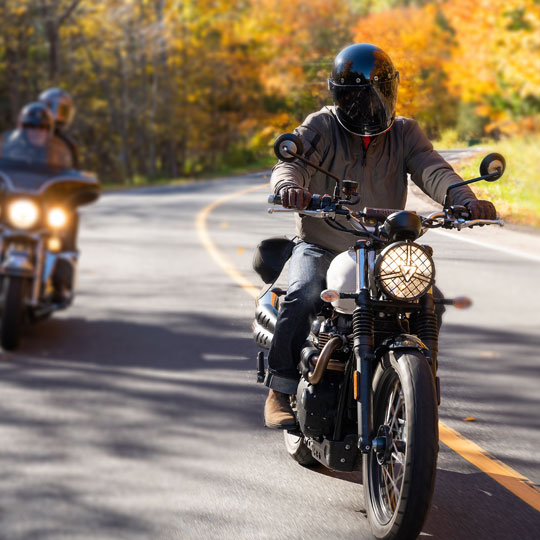
By September, the number on your phone stops matching what you feel at 65 mph. A 55°F morning turns into something closer to 35°F once wind chill hits your hands, chest, and knees — usually the point most riders park the bike until spring.
You don't have to store it that early. You just have to change what's underneath your jacket.
Riders who put their bikes away in early fall are almost always reacting to wind chill, not actual air temperature. Heated gear addresses that directly instead of asking you to layer around it with bulky insulation that restricts movement and still leaves gaps at the wrists and collar.
Why Wind Chill Ends Riding Season Early
Wind chill accelerates heat loss at highway speed. A 50°F day at 60 mph feels closer to 35°F on your hands and chest — well below where most riders start losing dexterity and focus. Standard riding gear blocks wind but doesn't generate heat, so once temperature drops far enough, insulation alone can't keep up.
Heated liners add an active heat source under your existing jacket and pants instead of more bulk. Carbon fiber heating elements, used in most current liners, spread heat evenly across the panel. Older wire-based elements create hot spots over the wire and cold gaps between rows — a difference that matters more at riding speed, when wind constantly pulls heat away.
12V Hardwired vs. Battery-Powered: Which Fits Your Fall Rides
12V hardwired gear plugs into your bike's electrical system through a coax or SAE harness, usually routed to a temp-controller on the bars or tank. It draws power continuously while the engine runs, so runtime is unlimited — the tradeoff is it only works while riding, and a jacket liner on high pulls roughly 4-7 amps, enough that idling with the heat maxed can strain a smaller battery.
Battery-powered gear, typically 7.4V, runs untethered on a rechargeable pack — useful for stops where you're off the bike but still cold. Expect roughly 3-4 hours on high and up to 10 hours on low, depending on pack size. It suits walking around at your destination; 12V suits long highway stretches in the saddle.
Some riders run both — a 12V jacket liner for the ride, plus battery gloves once parked. Warm & Safe builds exclusively for the 12V motorcycle market, with liners that plug directly into a coax harness and temp-controller.
Heat Zones: What Actually Keeps You Warm
A 3-zone jacket liner covering chest, back, and collar handles most riders down into the 40s. Below that, cold air pulls heat out through your hands and lower legs fastest — that's when heated gloves and a heated pant liner start to matter. Pant liners built for motorcycle use often run 5 heating zones to cover thighs and shins, more than the 3-zone standard in general cold-weather clothing.
Voltage is the better indicator of output than wattage here: 7.4V battery liners run cooler and lighter for portability, while 12V hardwired liners push more sustained heat since they aren't limited by pack capacity. That's why serious cold-weather riders lean 12V for the jacket and pants, saving battery power for gloves.
Best for: Riders extending a regular commute or weekend ride into October and November, or anyone who's given up a good riding week because of one cold morning forecast.
Skip it if: You only ride a handful of days a year in mild weather above 55°F — a windproof jacket liner and good gloves will cover that without the cost or wiring of a heated system.
Next Steps
Most riders who add a 12V or battery heated liner report riding 4-8 additional weeks on each end of the season — the range between "too cold to enjoy it" and "too cold to be safe." If you're not sure where to start, go with whichever part of your ride gets cold first, usually the hands and chest. Browse our full Heated Motorcycle Gear selection, or contact us and we'll help you narrow it down. Our Heated Motorcycle Clothing Buying Guide covers sizing and integration, and our Best Heated Gloves for Cold Hands post covers the same battery-vs-12V tradeoff for gloves. Gearing up now instead of waiting for the first cold snap also means better luck with sizing and stock — a timing advantage we covered in our Buy Heated Gear in Summer post. For cold-weather riding fundamentals, the Motorcycle Safety Foundation's riding tips guide is a solid outside reference.
Disclaimer: This post is general guidance. Always follow the manufacturer's instructions for wiring heated gear to your motorcycle and for charging or storing battery packs. Store lithium-ion packs at roughly 40-60% charge in a cool, dry place off-season — never fully depleted, fully charged, or left in a hot garage — since extreme heat degrades battery life permanently.
Frequently Asked Questions
- Q: How much longer can heated motorcycle gear extend your riding season?
A: Most riders add 4-8 extra weeks of riding on each end of the season with a 12V or battery heated liner, depending on climate and wind exposure. - Q: What's the real difference between 12V and battery-powered heated motorcycle gear?
A: 12V gear plugs into your bike's electrical system for unlimited runtime while the engine runs. Battery-powered gear (usually 7.4V) runs untethered for roughly 3-10 hours, which makes it better for stops off the bike. - Q: Does hardwired 12V heated gear drain your motorcycle's battery?
A: A jacket liner on high draws roughly 4-7 amps, which most charging systems handle fine while riding — but idling for long periods with the heat maxed can strain a smaller battery. A temp-controller lets you run a lower setting at stops. - Q: How many heat zones do you actually need for fall riding?
A: A 3-zone liner covering chest, back, and collar handles most riders down into the 40s. Below that, heated gloves and a 5-zone pant liner start to matter, since cold air pulls heat out through your hands and legs fastest. - Q: Can heated motorcycle gear be worn under your regular riding jacket?
A: Yes — most 12V and battery liners are built as a base layer under your existing jacket and pants, so you don't need to replace your outer shell to add heat.