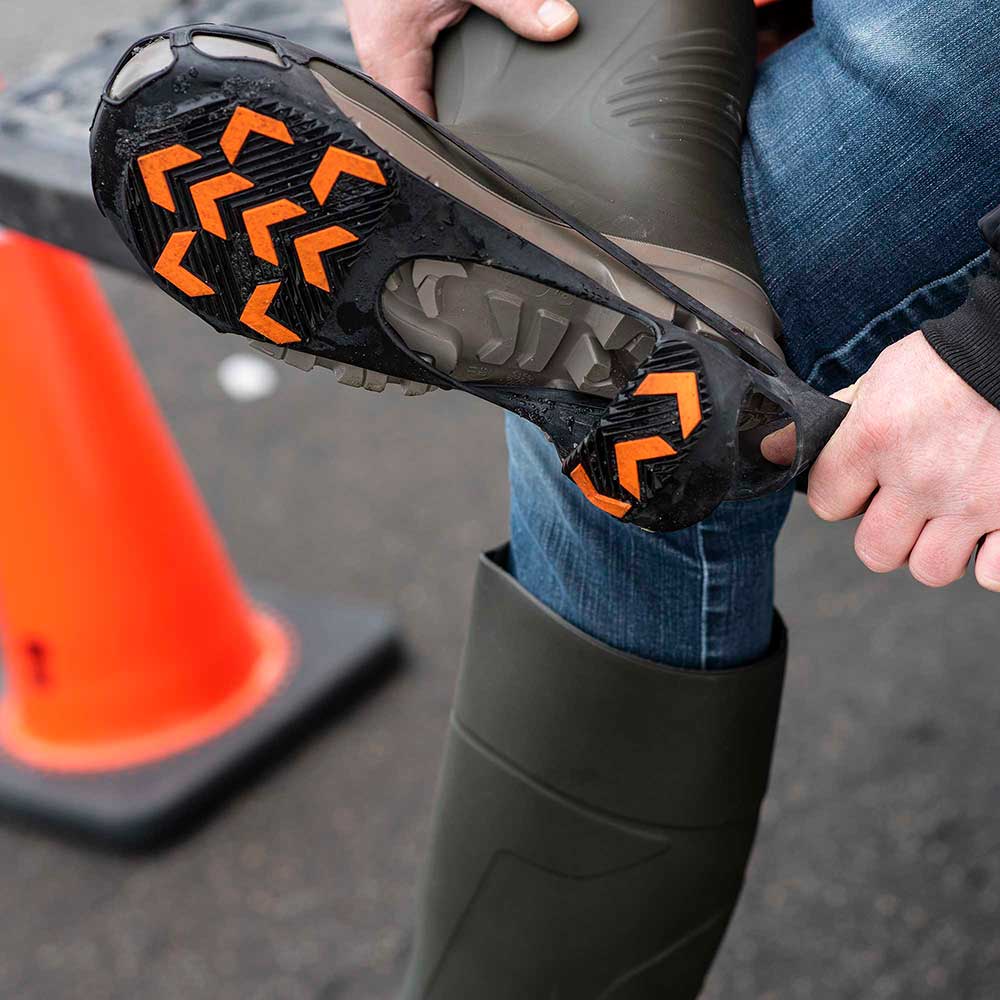
Quick answer: For most older adults, the safest winter setup is a low-profile, slip-on ice cleat with studs under the heel and ball of the foot, put on while sitting down and taken off before walking indoors. Add a heated mat on the one spot you cannot avoid, usually the front steps, and keep a second pair of cleats in the car.
A fall on ice is not a minor inconvenience after 65. The National Safety Council tracks falls as one of the leading causes of preventable injury and death for older adults, and winter adds a hazard you often cannot see until you are already on it. This guide is written for the person who walks to the mailbox, the car, and the pharmacy, not the person summiting a mountain.
Where Winter Falls Actually Happen
Most winter falls do not happen on dramatic, obvious ice. They happen in short, routine trips where people do not think to prepare:
- The first step out the door. Steps freeze first and thaw last, and they are often shaded.
- Getting in and out of the car. One foot is on ice while your weight is shifting.
- Parking lots in the morning. Melt from the day before refreezes overnight into black ice.
- The mailbox or trash can run. A 30-second trip in house shoes is when most people skip traction.
The fix is to put traction where those trips start, not to buy the most aggressive cleat on the market.
What to Look for in an Ice Cleat for an Older Adult
The right cleat for an older walker is different from the right cleat for a hiker or a lineman. Prioritize these in order:
- Easy on, easy off. A flexible rubber or TPR frame that stretches over the shoe without buckles or straps to fumble with in gloves.
- Studs under the heel and ball of the foot. That is where your foot meets the ground when you walk, so that is where grip matters.
- Low profile. Short studs feel more like walking in normal shoes and are less likely to catch on a curb edge.
- Light enough to carry. If it does not fit in a coat pocket or glove box, it will not be with you when you need it.
If you are weighing stud designs, our guide to spiked vs. spikeless ice cleats explains the tradeoffs in more detail.
Which Traction Product Fits Which Situation
| Situation | Pick | Price | Why it fits |
|---|---|---|---|
| Everyday errands, mailbox, sidewalks | WinterGrips Walkers | $14.95 | Rust-resistant steel studs under the heel and ball, flexible enough to keep in a glove box |
| Hard-packed snow, longer walks, uneven lots | WinterGrips Heavy Duty | $24.95 | 20 multi-directional saw-tooth stainless steel cleats for more bite |
| Front steps or entry ramp you use every day | HeatTreads Snow Melting Mat | $269.95 | Plugs into a 120V outlet and melts snow as it falls, no salt tracked inside |
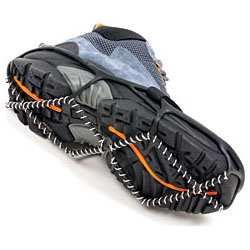
A simple rule: one pair of Walkers by the door, one pair in the car, and a heated mat only if your entry steps are the place you have slipped before.
How to Put Ice Cleats On Without Losing Your Balance
The most dangerous moment with ice cleats is putting them on standing up. Use this routine:
- Sit on a bench or chair inside the door.
- Hook the toe of the cleat over the front of your shoe first.
- Stretch the heel of the cleat back and up over your heel.
- Check that the studs sit under your heel and the ball of your foot, not off to the side.
- Stand up holding a railing or door frame and take two test steps on a mat before you go outside.
For thick-soled winter boots, buy one size up so the frame is not straining.
When to Take Them Off
Metal studs that grip ice will slide on smooth indoor floors. Remove cleats before you step onto tile, linoleum, polished concrete, or wet store entrances. Remove them before driving, too, since studs can catch on pedals. Keep a small bag in your coat or car to carry them in.
Walking Habits That Work With Cleats
Cleats reduce slipping, they do not remove the risk. Pair them with a few habits:
- Take short, flat-footed steps and keep your weight over your feet.
- Keep both hands free. Use a bag with a shoulder strap instead of carrying things.
- Use railings on every step, even with cleats on.
- Walk on grass or snow-covered edges when the pavement looks wet but the air is below freezing.
- Plan errands for midday when surfaces have had the most sun.
Best For / Skip It
Best for: Older adults who walk to the car, mailbox, church, or store in winter, and family members buying a practical gift for a parent who lives alone.
Skip it if: The person only walks on cleared, salted surfaces and never on outdoor steps, or uses a walker on smooth indoor floors most of the day. Talk to their doctor or physical therapist about cane and walker ice tips instead.
Frequently Asked Questions
- Are ice cleats safe for seniors? Yes, when they are a low-profile walking style, put on while seated, and removed before stepping onto indoor tile or other smooth hard floors.
- Spikes or coils for an older adult? Studs or spikes placed under the heel and ball of the foot give the most predictable grip on driveways and parking lots. Coils work on packed snow but can roll on bare ice.
- Can you wear ice cleats in the car or the store? Take them off before driving and before walking into a store. Metal studs grip ice but slide on smooth floors.
- What size ice cleat should I buy for winter boots? Match your shoe size, and go one size up for thick-soled boots.
- Is a heated mat better than salt for front steps? A heated mat melts snow as it falls and is not tracked indoors, while salt has to be reapplied and can be slippery until it works.
Next Steps
Start with the trip that worries you most, usually the front steps or the car door, and put traction there first. Browse all WinterGrips ice cleats, our best-selling ice cleat for more than a decade, or contact us if you are buying for someone else and want help with sizing.
Written by the CozyWinters team. CozyWinters has supplied ice cleats to households, businesses, and government agencies since 2002. This article is general safety information and is not medical advice. If you or a family member has fallen recently or has balance concerns, talk with a doctor or physical therapist.