Your car didn't come with heated seats, and every morning the leather feels like a block of ice through your jeans. A plug-in heated seat cover looks like the obvious fix — until you start wondering whether it'll leave you with a dead battery in a parking lot.
Short answer: not if you use it the way it's designed.
A heated car seat cover won't drain your battery while the engine is running, because the alternator supplies the power. Drain only becomes a risk when the cover stays plugged in and switched on with the engine off — and that depends mostly on how your car's 12V socket behaves.
Cozywinters.com was the winner of the Car & Driver best overall heated seat cover for 2026
How Much Power Does a Heated Seat Cover Draw?
The Deluxe Heated Car Seat Cover draws 5 amps from your 12V socket — about 60 watts. That's similar to a phone charger, a dash cam, and a cabin light running at the same time: noticeable, but well within what your charging system handles.
With the engine running, your alternator produces more current than your car's accessories use, so the cover draws from the alternator, not from your battery's stored charge. You can run it on high for an entire road trip without draining anything.
With the engine off, the cover runs on battery reserve alone. A typical car battery stores roughly 40–70 amp-hours. One hour at 5 amps uses 5 of those — not enough to strand you once, but enough to matter if it happens every night, especially in cold weather when your battery already delivers less cranking power.
When Battery Drain Actually Happens
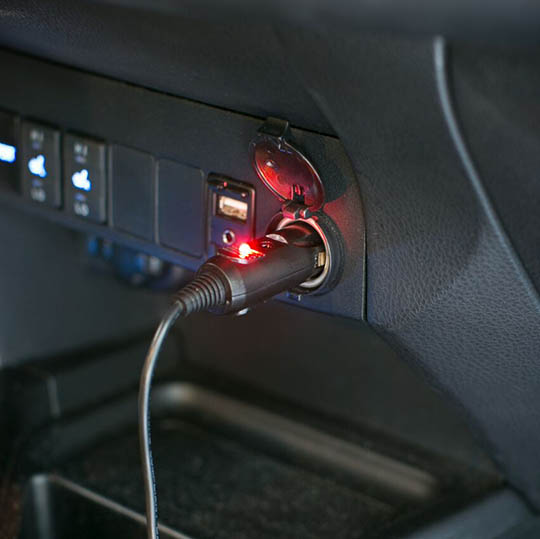
Always-on sockets are the real risk. Many vehicles cut power to the 12V socket when you turn off the ignition. Some keep it live all the time. If yours stays live and you leave the cover switched on, it keeps drawing until something stops it.
Auto shutoff is the safeguard. The Deluxe cover shuts off automatically after 30 minutes, which caps engine-off drain at about 2.5 amp-hours — a small fraction of a healthy battery. That's the single most important spec to check on any heated seat cover you buy.
Splitters add up. Running two seat covers plus a phone charger through a socket splitter can push total draw past 10 amps. Most 12V sockets are fused somewhere between 10 and 20 amps, so check your owner's manual before stacking devices on one outlet.
Quick way to test your car: plug in a phone charger with an indicator light, turn off the ignition, and remove the key or close the door. If the light stays on, your socket is always live — unplug the cover when you park.
How a Heated Seat Cover Warms You
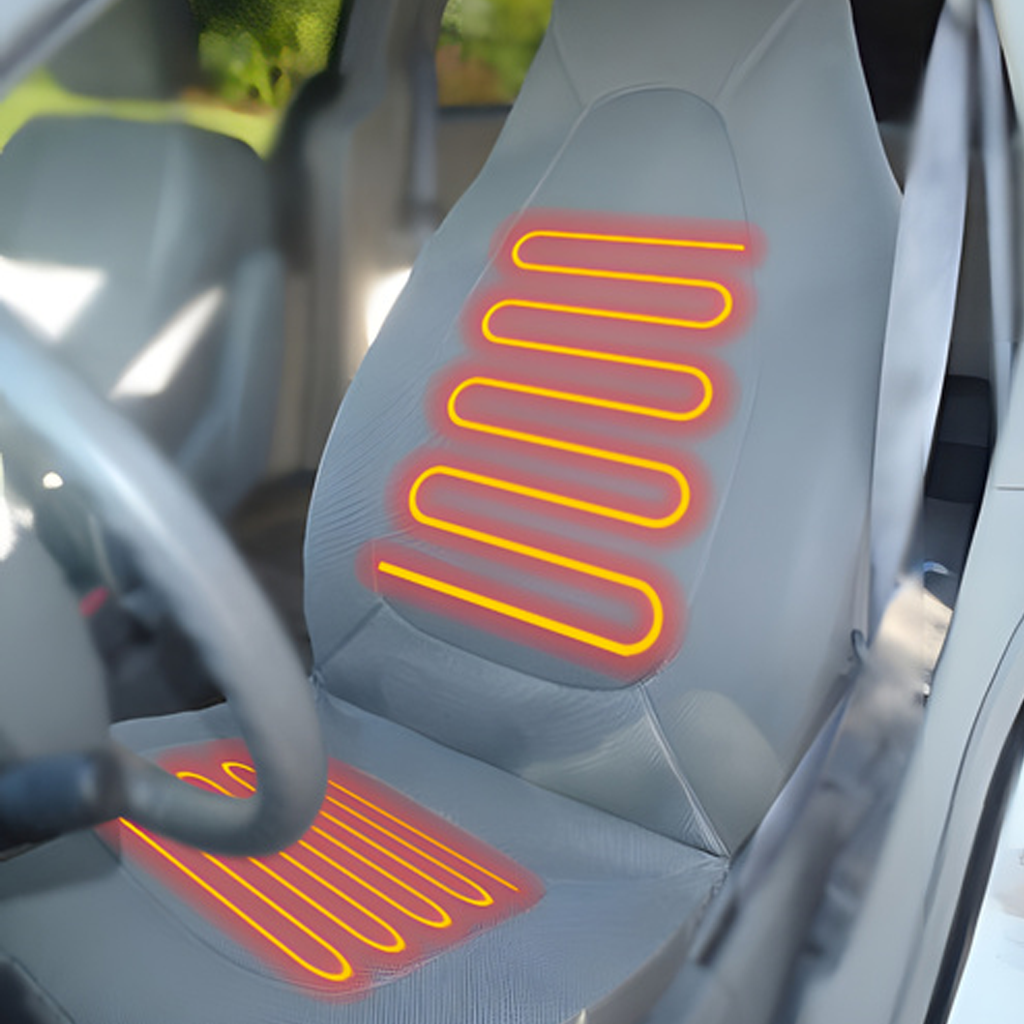
The Deluxe cover uses thin micro-alloy far-infrared heating elements spread through the seat and backrest, with soft foam lining over them so you don't feel wires. Infrared elements warm your body directly rather than heating the air first, which is why you feel heat within a few minutes. Three settings — high, medium, and low — top out at 132°F.
Independent testing backs that up. When the Car and Driver Gear Team tested five heated seat covers through a Northern Michigan winter, they named the Deluxe cover Best Overall. On high it reached 108.1°F at the seat surface after 10 minutes — the hottest cover in their test — and drew just 47 watts in their power test, below its rated 5-amp maximum. That measured draw is even lighter on your electrical system than the numbers above suggest.
Fit matters as much as heat. Universal covers attach with adjustable bands and fit most bucket seats from the last 15 years, but they won't fit seats with built-in seat belts. We covered other seat-warming options, from stadium cushions to chair covers, in our guide to heated seat covers and cushions.
Best for: Drivers in vehicles without factory heated seats, long commutes in cold climates, and anyone with lower-back stiffness who wants steady warmth on the drive.
Skip it if: Your car already has factory heated seats that work, or your seats have integrated seat belts. A heated throw over your lap is a better fit for those situations.
Simple Habits That Prevent Drain
- Turn the cover off before you turn the car off.
- Unplug it when you park if your 12V socket stays live.
- Don't run it while waiting with the engine off for more than a few minutes.
- Have your battery tested before winter if it's more than 3–4 years old — a weak battery fails from cold long before a seat cover causes trouble.
Next Steps
A 12V heated seat cover with auto shutoff is one of the lowest-risk ways to add heated seats to a car that doesn't have them. Browse our full selection of heated seats, covers, and cushions to find the right fit.
Disclaimer: The information in this post is general guidance. Always follow the manufacturer's installation and safety instructions for your specific product and your vehicle owner's manual, including socket fuse ratings and any guidance on seat covers for seats with side airbags. If you have a medical condition affecting temperature sensitivity, consult your healthcare provider before using heated products.
Frequently Asked Questions
- Q: Will a heated seat cover drain my car battery overnight?
A: Only if your 12V socket stays powered with the ignition off and the cover has no auto shutoff. A cover with a 30-minute auto shutoff uses about 2.5 amp-hours at most before turning itself off. - Q: How many amps does a 12V heated car seat cover use?
A: Most draw around 4–5 amps, or roughly 50–60 watts. The Deluxe Heated Car Seat Cover draws 5 amps from a standard cigarette lighter socket. - Q: Can I run two heated seat covers from one socket?
A: You can with a splitter, but two covers at 5 amps each pull 10 amps combined. Check your vehicle's socket fuse rating first so you don't blow the fuse. - Q: Are heated seat covers safe to use while driving?
A: Yes, when they're secured with their straps and don't interfere with seat belts. Universal covers won't fit seats with integrated seat belts, so check your seat design before buying. - Q: How hot does a heated car seat cover get?
A: The Deluxe cover has three heat settings with elements rated up to 132°F. In Car and Driver's testing, it measured 108.1°F at the seat surface after 10 minutes on high, the warmest of the five covers they tested.